
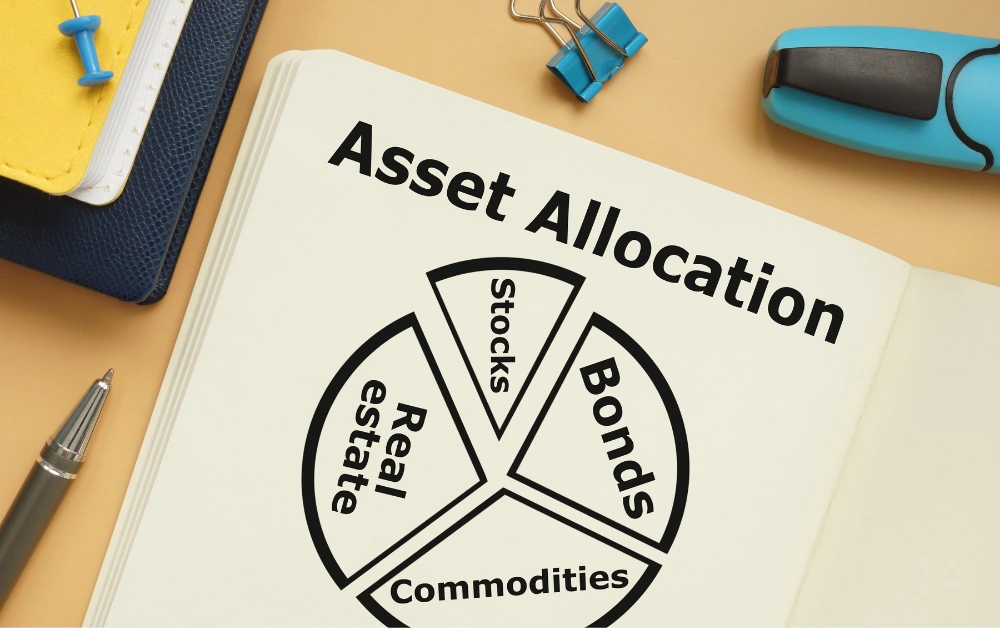
Understanding how to invest in stocks and bonds is essential for building a diversified financial portfolio and targeting long-term financial goals. This guide explores the mechanics, suitability, core steps, risks, and comparisons between stocks and bonds, helping readers make informed decisions on entering U.S. public markets, with up-to-date practices for 2025.
Who This Is For & Suitability
- Individuals beginning their investment journey and seeking to understand fundamental options for long-term wealth building.
- Earners with discretionary income considering asset allocation between equities (stocks) and fixed income (bonds) for growth, income, or capital preservation.
- Those with varying risk tolerance, time horizons, and liquidity needs, ranging from conservative savers to aggressive growth investors.
- Investors concerned with balancing market risk, inflation, and income needs; suitable for most adults but requires self-education and ongoing review.
Key Facts (At-a-Glance)
| Item | Stocks | Bonds |
|---|---|---|
| What They Are | Equity ownership in a company; potential for dividends and capital appreciation. | Loan to an issuer (government, agency, corporation); receive coupons and principal at maturity. |
| How to Invest | Open a brokerage account; buy individual stocks or stock funds/ETFs. | Open a brokerage account (or use TreasuryDirect for U.S. Treasuries); buy individual bonds, bond funds, or ETFs. |
| Returns | Dividends (if declared), capital gains/losses; subject to price volatility and business performance. | Periodic coupon payments, return of principal; sensitive to yield to maturity (YTM), credit risk, and rate movements. |
| Yield/Income | Current yield (dividends/price); growth potential varies. | Coupon rate, current yield, yield to maturity (YTM), yield to worst (YTW). |
| Key Risks | Market risk, company-specific risk, dividend cuts, liquidity. | Interest-rate risk (duration, convexity), credit/default risk, liquidity, call risk. |
| Liquidity | Typically high for large-cap stocks; variable for small-caps, micro-caps. | Varies by issuer/market; U.S. Treasuries highly liquid, some corporates and munis less so (TRACE visibility for corporate bonds). |
| Fees & Costs | Commissions (mostly zero in U.S.), bid-ask spreads, mutual fund/ETF expense ratio if applicable. | Bid-ask spread, dealer markup/markdown, accrued interest, commissions, mutual fund/ETF expense ratio where applicable. |
| Taxes | Dividends may be qualified or ordinary; capital gains taxes; tax loss harvesting applies. | Interest taxed as ordinary income (U.S.), OID rules, potential tax advantages for certain bonds (e.g., municipals); capital gains if sold before maturity. |
| Disclosure & Oversight | SEC registration and filings, continuous disclosure (EDGAR). | SEC, FINRA TRACE for transaction reports; MSRB EMMA for munis; SEC for bond fund disclosures. |
How To Get Started: Step-by-Step
- Research and determine your investment objectives, risk tolerance, and time horizon for stocks and bonds.
- Open an online brokerage account with a reputable, regulated firm. In the U.S., these are overseen by the SEC investor education homepage (official) and FINRA (official). For U.S. Treasuries, TreasuryDirect (official) is an option for direct government bond purchases.
- Fund your account using a linked bank or ACH transfer; minimums may apply based on broker.
- Choose between buying individual stocks, bonds, or pooled vehicles (mutual funds or ETFs). Diversified funds are common for beginners. For bonds, decide between Treasuries, corporates, munis, or aggregate bond funds.
- Place trades through your online platform—stocks trade in shares (often whole, sometimes fractional); bonds trade in $1,000 or $5,000 minimum denominations for most individual issues.
- Monitor your investments. Review account statements, track yields (current yield, YTM, YTW for bonds; dividend and capital gains for stocks), and rebalance periodically according to changes in goals or market conditions.
Stocks: Mechanics & Considerations
- Stocks represent partial company ownership—shareholders participate in economic fortunes via share price and any dividends.
- Trade on centralized exchanges (e.g., NYSE, NASDAQ) or, for micro-cap/OTC, on decentralized platforms; liquid, price-discovered markets.
- Volatility can be high; value may fluctuate daily based on earnings, economic news, and sentiment. Diversification and time in market are important to manage risk.
- Fundamental metrics for evaluation include price-to-earnings, dividend yield, earnings growth, and credit rating where applicable (for preferred stock).
Bonds: Mechanics & Considerations
- Bonds are debt instruments issued by governments, corporations, or municipalities, paying periodic coupons and principal at maturity.
- Types include U.S. Treasuries (T-Bills, Notes, Bonds; TIPS; Savings Bonds), corporate bonds (investment grade or high yield), agency bonds, and municipal bonds (munis).
- Traded over-the-counter (OTC) via dealers or electronically; price transparency has increased—FINRA TRACE overview (official) reports most transactions for corporate and agency bonds.
- Bond prices respond to changes in interest rates and credit risk; pricing is often quoted as a percentage of par (“clean price”), with “dirty price” including accrued interest earned since the last coupon date.
- Common yield calculations: current yield (annual coupon divided by price), yield to maturity (YTM), and yield to worst (YTW; considers earliest call).
- Duration and convexity measure interest-rate sensitivity; longer maturities and lower coupons mean higher duration and thus higher risk in rising rate environments.
Costs, Taxes & Disclosures
| Component | What It Covers | How It’s Experienced |
|---|---|---|
| Bid-Ask Spread | Liquidity cost, reflects market depth and activity | Implicit in execution—the price difference between buy/sell orders |
| Dealer Markup/Markdown | Compensation to market makers and brokers for facilitating bond trades | Embedded in the execution price (sample/illustrative) |
| Commissions/Platform Fees | Brokerage fees to execute trades | Usually $0 for online stock and ETF trades in the U.S.; may apply to bond trades (“sample/illustrative”) |
| Accrued Interest | Coupon interest earned to-date on bonds | Buyers pay sellers accrued interest at settlement on secondary trades |
| Expense Ratio (Funds) | Management and administrative costs for mutual funds and ETFs | Charged annually as a % of assets; lower is generally better |
| Taxes | Dividends, interest, OID, and capital gains | Ordinary income for bond interest, qualified or non-qualified dividends for stocks; realize capital gains when sold; tax-advantaged accounts can change outcomes |
- Always consult current IRS and SEC resources for tax treatment, as rules and brackets update annually. The IRS official page: investment income taxation is a primary reference point.
- Official disclosure for stocks and bonds can be found via the SEC EDGAR filings (official). Fund prospectuses detail fee structures and holdings, and publicly traded company filings provide insight into business performance and risk.
Risks
-
For Stocks:
- Market risk (broader economic swings, geopolitical shocks).
- Company-specific risk (earnings misses, mismanagement, fraud, bankruptcy).
- Liquidity risk, especially in thinly traded or micro-cap shares.
- Dividend cuts and dilution.
-
For Bonds:
- Interest-rate risk, measured by duration and convexity, especially for longer maturities/lower coupons.
- Credit/default risk—issuer downgrade or bankruptcy can cause losses; credit rating is a key reference.
- Reinvestment risk if coupons are paid when prevailing rates have fallen.
- Callable or putable features—early repayment can limit upside (“yield to call,” “yield to worst”).
- Liquidity and marketability, particularly for smaller issuers.
- Inflation risk (bond’s real value eroded if inflation outpaces yield).
- For Both: Beware of concentration risk—overexposure to a single stock, sector, or bond issuer can increase volatility.
Alternatives & Comparisons
Side-by-Side
| Feature | Individual Stocks | Individual Bonds | Mutual/ETF Stock Funds | Mutual/ETF Bond Funds | CDs/Money Market |
|---|---|---|---|---|---|
| Diversification | Requires holding many stocks | Requires multiple issues (bond ladder or diversified types) | Inherent in pooled funds | Inherent in pooled funds | Not diversified; only issuer bank risk (for CDs) |
| Liquidity | High (for large-caps) | High for Treasuries, variable for others | Generally high | Generally high; may vary by fund/liquidity of holdings | Very high (bank CDs, money markets) |
| Yield/Return Potential | High (growth and income) | Tied to coupon, YTM, credit risk | Aligned with benchmark/manager skill | Aligned with benchmark/manager skill | Low; matches short-term rates |
| Management Style | Self-directed (research/buy/sell) | Self-directed | Professional management or index tracking | Professional management or index tracking | Bank sets conditions |
| Minimum Investment | Single share (sometimes fractional share allowed) | Often $1,000–$5,000 per bond for individuals (sample/illustrative) | Often $1–$500 minimums | Often $1–$500 minimums | Usually $500–$1,000 minimum for CDs |
| Fees | Low for online brokers; expense ratio for funds | Spread, markup/markdown, potential commission | Expense ratio, possible sales charges | Expense ratio, possible sales charges | No fees, but early withdrawal penalty for CDs |
| Risk Considerations | Market, business, dividend, liquidity | Interest-rate, credit/default, call/prepayment | Market, manager, tracking error | Interest-rate, credit/default, manager, tracking error | Bank default (FDIC insured up to limits for CDs) |
How to Evaluate Stocks and Bonds
-
Stocks:
- Company fundamentals (revenue, earnings, growth trajectory).
- Industry and competitive positioning.
- Valuation metrics (P/E, P/B, P/S, dividend yield).
- Liquidity and average trading volume.
- Insider activity and corporate governance.
-
Bonds:
- Issuer type (sovereign, investment grade, high yield), credit rating, and outlook.
- Coupon structure (fixed, floating, zero-coupon), call/put schedules, sinking funds.
- Duration and convexity vs risk tolerance and interest-rate outlook.
- Liquidity profile (trace activity, market size, bid-ask spread).
- Yield metrics—current yield, yield to maturity (YTM), yield to worst (YTW), spread to Treasury.
- Tax profile (e.g., municipal bonds’ federal/state exemption for U.S. investors).
Frequently Asked Questions
Do I need a lot of money to start investing in stocks or bonds?
- Many brokers allow account openings and investments with $0 minimums, offering fractional shares or low-cost funds.
- Individual bonds often require $1,000–$5,000 (sample/illustrative), but bond funds/ETFs provide access at low minimums.
How do I pick between stocks and bonds?
- Asset allocation should reflect your time horizon, risk tolerance, and need for income or growth.
- Stocks favor longer-term growth; bonds generally add income, stability, and diversification.
What should I watch out for with online brokers?
- Check that the platform is registered with the SEC and FINRA and is insured for investor assets.
- Compare fees, available investments, tools, and educational resources—always read disclosures.
What are “bond ladder” and “diversification” strategies?
- A bond ladder spreads maturities across time to manage reinvestment and interest-rate risk.
- Diversification means not putting all your funds in a single company or bond; use funds for instant diversification if starting small.
Do I pay taxes if I hold investments in a retirement account?
- Tax-advantaged accounts (IRA, 401(k)) can defer or shelter investment taxes; check current IRS rules for specifics.
- Withdrawals may have tax impacts; rules vary by account type and jurisdiction.
Conclusion & Next Steps
- Investing in stocks and bonds provides a spectrum of risk and return characteristics essential for constructing a resilient portfolio.
- Begin with a clear understanding of your objectives, choose the right mix of individual and fund investments, and review official sources like SEC investor education (official) as you build knowledge.
- Regularly revisit your asset allocation, stay informed of market, tax, and fee changes, and periodically rebalance to maintain your desired risk profile.
- Consider starting with low-cost funds or ETFs if managing individual securities feels overwhelming, always verifying details with your broker and referring to the latest official regulator guidance before making financial decisions.