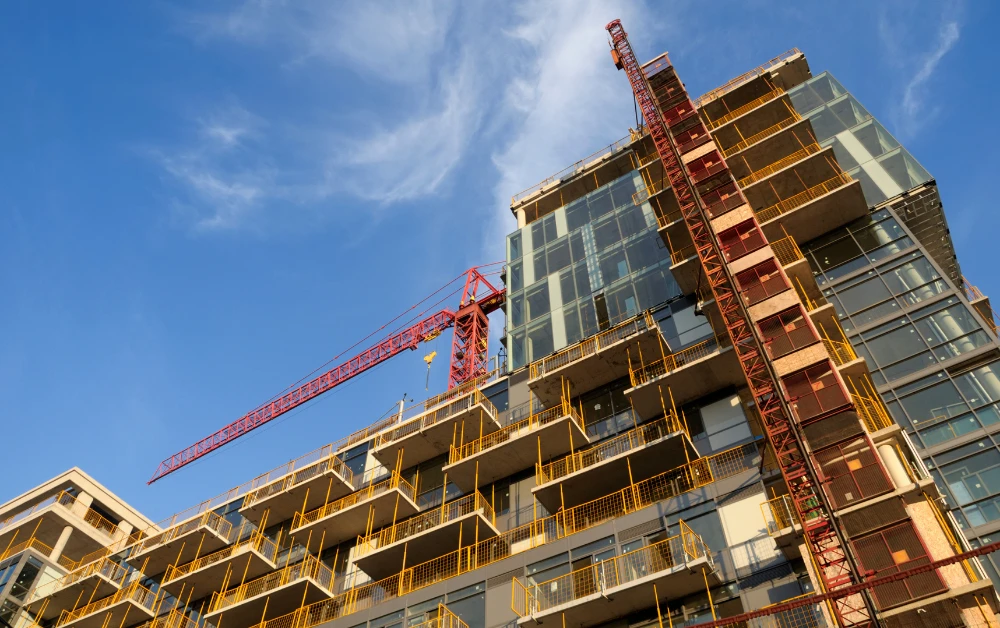
A construction Mortgage rate determines borrowing costs for building a new home, with distinct features compared to standard home loan rates. This page covers how construction mortgage rates work, recent market examples, eligibility requirements, repayment structures, and what borrowers should know before financing a new build.
Who This Mortgage Is For
Individuals or families planning to build a new home rather than purchase an existing property.
Self-builders who own or will purchase land and want to finance construction costs in phases.
Property developers or investors seeking short-term funding for spec builds or custom projects.
Homeowners replacing or substantially remodeling their residence, where a construction-to-permanent loan may be considered.
Borrowers who understand the risks and process complexities different from traditional purchase or refinance loans.
Key Facts (At-a-Glance)
Item
Details
Loan Purpose
New construction, substantial remodels, or custom home builds.
Property & Occupancy
Primary residence, second home, or investment property; structure and land must meet criteria set by lender.
Rate Type
Typically variable/adjustable during construction; some offer fixed conversions post-completion.
Term Length
Construction period is usually 6–18 months (sample/illustrative); permanent mortgage often 15–30 years after conversion.
APR
Ranges from ~6.8% to over 11.5% according to August 2025 samples; varies by lender, LTV, and credit.
Points & Credits
Origination points common (example: 1% fee included in sample APRs); credits may offset closing costs (varies).
Down Payment
Often 20% minimum (example: 20% required for fixed rate new builds per source).
Loan-to-Value (LTV)
Maximum LTV typically 80% (sample/illustrative); stricter for investment or non-owner-occupied projects.
Debt-to-Income (DTI)
Sample maximum DTI caps fall in the 40–45% range (varies by lender/program).
Mortgage Insurance
PMI may apply if LTV > 80%; rules depend on lender and final occupancy type.
Loan Limits
May be capped by conforming loan limits or lender’s internal policies; verify on official sources.
Closing Costs
Typical range includes origination, draw fees, inspections, title insurance; sample/illustrative: 2%–5%+ of loan amount.
Prepayment Penalty
Usually none on permanent phase, but confirm; penalties may apply to short payoff or pre-completion.
Rate Lock
Lock-in available pre-closing; terms vary, especially if converting to permanent mortgage.
Escrow
Escrow for taxes/insurance on permanent loan; draws managed via construction escrow for disbursement control.
Pros
Enables construction of a custom-designed home or major remodel with staged funding.
Interest-only payments during build phase reduce carrying costs until completion.
One-time close or construction-to-permanent options roll into standard mortgage post-build.
Borrowers may lock in land costs before further appreciation.
Can avoid dual loan closings and fees if permanent mortgage is bundled.
Cons
Typically higher rates and fees versus conventional purchase loans, reflecting risk and monitoring requirements.
Larger down payment (often 20% minimum), making it less accessible for some borrowers.
Complex approval process with detailed project review, builder vetting, and draw schedules.
Interest rate and payment may rise if construction period extends or if floating rate applies.
Delays or cost overruns can impact approval, funding draws, and lead to re-underwriting or additional equity requirements.
Costs, APR & Amortization
The nominal interest rate is charged only on the disbursed loan balance during construction, leading to lower initial payments.
The APR includes origination fees (e.g., 1% per BECU’s published rates), draw fees, and possibly other required costs. Confirm current rates and APRs on lender-official disclosures (BECU Mortgage Rate Sheet).
Private Mortgage Insurance (PMI) may be required if the LTV exceeds program thresholds upon conversion to a permanent mortgage.
Typical closing costs include lender origination, title/escrow, third-party inspections for draw requests, and other administrative fees; these can amount to 2–5% or more of the loan value.
Escrows for homeowner’s insurance and property taxes usually begin once the loan converts to a standard mortgage.
Sample/illustrative costs follow. Individual results may vary—always verify details and up-to-date disclosures from your selected lender.
Example
Loan Amount
Rate
APR
Term
Monthly Principal & Interest
Total Paid
Sample Scenario
$100,000
6.25%
6.863%
12-month construction + 30-year amortization after conversion
During construction: interest-only (e.g., ~$520/month on full balance; lower as undrawn); after conversion: $616/month principal & interest (sample/illustrative)
Depends on total draws, interest-only period, and post-build amortization; refer to lender amortization schedules
Higher Rate Example
$250,000
8.50%
11.543%
Similar structure
Interest-only during build; higher payments post-conversion
See full cost breakdown in official rate tables
Fixed vs Adjustable (ARM)
Most construction loans feature a variable or adjustable rate during the build, tied to prime or index plus margin, because the risk period is short and original principal is not fully drawn immediately.
Some lenders offer a fixed-rate lock for the permanent phase, either at conversion (“one-time close”) or via a separate application upon completion.
Adjustable-rate structures may include periodic or lifetime adjustment caps, affecting future payments if not refinanced into fixed.
Fixed-rate options (if available) tend to carry a higher initial interest cost but offer future payment stability; ARMs may be lower initially but reset after a scheduled period.
Eligibility, Underwriting & Documentation
Lenders evaluate borrower credit score (usually 680+ for best terms, sample/illustrative), income, DTI, assets, and down payment sources.
Verification of employment and income stability is required; sometimes large reserves are examined due to construction’s unique risks.
The property must appraise based on plans/specifications (“subject to completion”). Title and land ownership are confirmed.
Approved, licensed builder required; budget, timeline, and permits reviewed; self-build options may involve stricter terms or disallowance.
Draw schedules outline how funds are released after each inspection milestone—lender may control disbursements through construction escrow.
Pre-approval advisable before bidding on land or contracting a builder. Shop rates within your credit window to minimize impact on your score.
Submit a detailed application with construction budget, blueprints, permits, builder credentials, and timeline.
Receive early disclosures (Loan Estimate in the US) with full rate, APR, points, and fee information.
Lender underwrites project and performs an appraisal “as-completed.” Title and insurance are checked; construction agreement is finalized.
Closing on the construction mortgage funds the land purchase or pays off existing land loan; builder escrow is set up for draw management.
During construction, regular inspections trigger draw releases; upon completion and certificate of occupancy, the loan either converts automatically to a permanent mortgage or requires a new closing.
Government-Backed & Special Programs
US borrowers may access construction-to-permanent loans through national programs, though these are less common than standard loans. FHA and VA both offer variants—see official FHA construction guidelines (FHA 203(k) program details).
Some state or local housing agencies support affordable new build or renovation loans. Check eligibility, property type, and purpose on official portals.
Special rates or reduced down payments may be available to qualifying veterans or first-time buyers using government or non-profit lending programs.
Rate Locks, Points & When to Reprice
Longer construction periods may require an extended or “float-down” rate lock option if rates fluctuate during the build; these may involve an additional fee.
Discount points (upfront interest paid to reduce the rate) may be available but must be weighed against total project cost and likely refinance or conversion timing.
Lender credits can help offset closing costs but may increase the interest rate; carefully compare APRs rather than just “headline” rates.
If the project is delayed or materially changed, the lender may re-underwrite and new terms or pricing may apply.
Refinance & Remortgage Options
Upon completion, many borrowers refinance their construction loan into a permanent fixed-rate or adjustable-rate mortgage.
“One-time close” loans convert automatically to permanent status; otherwise, a new application and closing may be required.
Cash-out refinance is generally not an option until the property is fully complete, appraised, and meets standard lending thresholds.
Weigh total closing costs, rate stability, and personal timeline when deciding whether to refinance or use a different lender upon conversion.
Risks & Responsible Borrowing
If the construction process is delayed or the budget is exceeded, interest and costs increase, possibly requiring more cash at closing.
Borrowers must be prepared for interest rate variability during the construction period, unless a rate lock is in place.
Payment shock may occur when the loan converts to a fully amortizing mortgage, especially if post-build rates are higher.
If home values fall or construction is incomplete, borrowers may face difficulty refinancing or selling, increasing foreclosure risk.
Budget for taxes, insurance, unforeseen expenses, and avoid overextending financial resources during the build.
Alternatives & Comparisons
Side-by-Side Comparison
Feature
Construction Mortgage Rate
Fixed-Rate Alternative
ARM/HELOC Alternative
Rate Type
Variable or adjustable during build; fixed or ARM after conversion
Fixed for full term; set at closing
Initial lower rate; rate adjusts after period (ARM) or taps equity as needed (HELOC)
Down Payment
Often 20% minimum (sample/illustrative)
As low as 3%–5% for some purchase programs (varies)
HELOCs typically 10%–20% equity needed; ARMs match standard loans
Insurance (PMI/MIP)
Required if LTV > 80% post-build
Required if LTV > 80%; rules vary by program
PMI may apply for ARM; HELOCs usually do not
Closing Costs
Higher due to draws, inspections, two-phase structure (2–5%+)
Standard origination, title, and escrow fees (2–4%)
ARM origination similar to fixed; HELOCs may have low or waived closing costs
Frequently Asked Questions
How do payments work during the construction phase?
Borrowers usually make interest-only payments based on amounts drawn to date (not full approved loan amount).
Payments rise as more of the loan is disbursed through progress draws.
After completion, the loan converts to standard principal & interest amortization.
Can I lock in my rate for the permanent mortgage before construction finishes?
Many lenders offer a rate lock during construction, often with time or fee limits.
“Float-down” options let you secure a lower rate if market rates drop before closing.
Terms and options vary—check with your chosen lender for specifics.
What documents are required for construction loan approval?
Detailed construction budget, plans, and permits.
Builder contract/credentials, proof of land ownership, and timeline.
Personal financials: credit, income, assets, and employment verification.
What happens if construction is delayed or costs more than expected?
Delays may incur extra interest, require loan extension, or new underwriting.
Cost overruns can necessitate additional borrower funds or budget revision.
Lender may inspect more frequently or require project reviews before additional draws.
Are there special construction loans for first-time buyers or veterans?
FHA and VA programs offer limited construction-to-permanent options; stricter eligibility applies—check official program details.
Some lenders and local housing agencies offer down payment assistance or support for certain buyer segments.
Conclusion & Next Steps
Construction mortgage rates suit borrowers seeking to build their own home, with adequate reserves and comfort managing phased-draw and approval processes.
Those preferring speed, simplicity, or lower upfront equity may consider existing home purchases, renovation mortgages, or other alternatives.